One of the key strengths of Project Alliance is that critical expertise is brought into the project before the most important decisions are locked in.
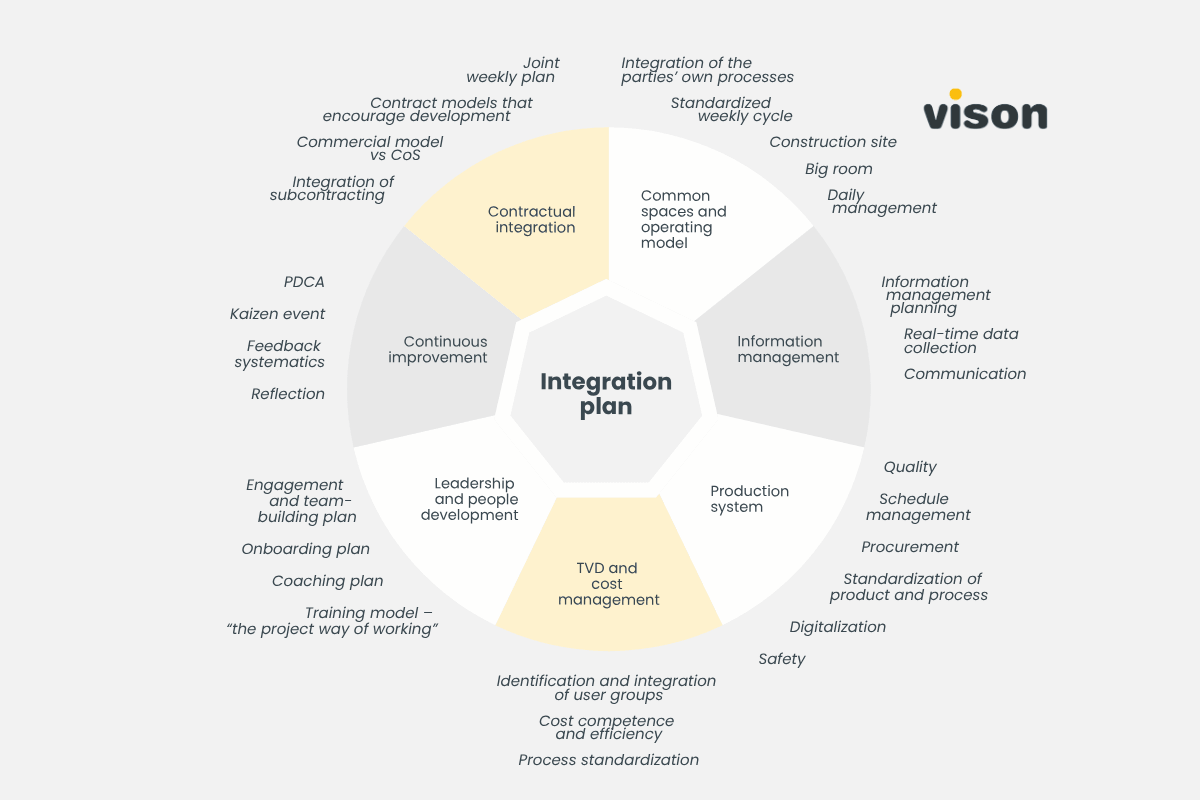
In Project Alliance, early integration means that the owner and key service providers are brought together during the development phase, before full implementation commitment is made. Instead of preparing the project separately and only later transferring it to contractors, the alliance team develops the scope, key solutions, risks and delivery strategy together.
Early integration enables the project team to address the most influential issues before implementation begins. Constructability considerations, delivery constraints and cost implications can be examined simultaneously rather than sequentially. During this phase, the project is advanced to a point where the Target Outturn Cost and overall feasibility can be assessed against the owner’s objectives and budget.
The development phase as a decision gate
A defining feature of the alliance model is that the development phase functions as a structured decision point. The owner evaluates whether the developed scope, risks and Target Outturn Cost meet the project’s objectives and budget. If alignment cannot be achieved, the project may be redefined or stopped before implementation begins.
Integration increasingly extends beyond the core alliance partners. In many projects, critical trade contractors and supply chain actors are involved during the development phase when their expertise is needed to shape key solutions. The earlier essential expertise is connected to the project, the better the project can be developed before implementation begins.
Early integration serves as one of the central operating mechanisms of Project Alliance: it is the phase in which the project becomes implementation-ready through joint development.
Learn more about the alliance model from in the Alliance Report 2026. Download it below!