Project Alliance is often described through its contractual structure. The contract creates the foundation, but it does not alone explain how alliance projects perform in practice. Performance comes from how governance, information and production are actually run, day to day, across the project lifecycle.
Seen this way, Project Alliance is less a contract and more a delivery system.
From shared information to coordinated delivery
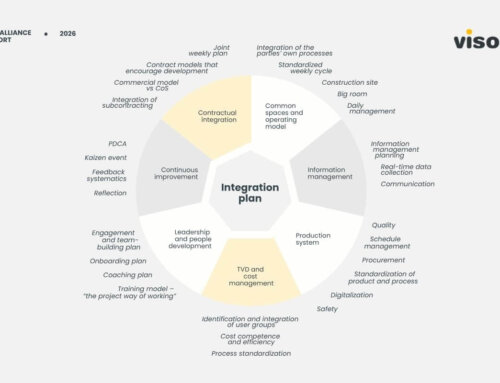
One part of that system is a common working environment. The Big Room approach brings owners, designers, contractors and stakeholders into closer cooperation through shared physical and virtual spaces, common processes and integrated ways of working.
The practical effect is earlier coordination: issues surface sooner, decisions are made together, and the team holds a common direction instead of defending separate positions.
When participants work from the same data on common digital platforms, transparency improves and the team builds situational awareness that crosses organisational boundaries. Structured production management then turns that awareness into rhythm.
Practices such as Target Value Delivery and the Last Planner System coordinate work between disciplines and make delivery more predictable.
Why the system matters more than any single method
None of these methods is decisive in isolation. Their value lies in the interaction, and in the way people, information, processes and production practices are integrated into one operating model.
This is also why alliance outcomes vary. The most advanced projects show strong development-phase leadership, deep trust and delivery management that every participant can access. Where traditional roles and silos persist, only part of the model’s potential is realised. The delivery system is what makes collaboration translate into performance, rather than remaining an intention.
Learn more about the alliance model in the Alliance Report 2026. Download it below!